Safely Removing Blown-Over Trees and Stumps
When a severe weather system rolls through Martinsburg, the aftermath can leave homeowners and commercial property managers dealing with a chaotic and hazardous landscape. High winds, heavy rain, and saturated soil are the perfect recipe for uprooting mature trees. Unlike a tree that snaps at the trunk, a blown-over tree pulls its entire root system out of the earth, leaving behind a massive crater and a highly complex removal challenge.
Dealing with this kind of tree storm damage requires more than just a sharp chainsaw and a free weekend. Uprooted trees present unique physical hazards that can severely injure an inexperienced homeowner. From immense tension trapped in the trunk to the risk of the root ball suddenly snapping back into its hole, the safe removal of blown over tree stumps and trunks is a job that demands professional expertise, specialized equipment, and strict adherence to safety protocols.
Whether a towering oak has barely missed your roof or a large maple has crashed across your macadam driveway, understanding the risks involved in cleaning up the mess is the first step toward restoring your property safely.

The Hidden Dangers of Cutting Uprooted Storm Trees
It is easy to look at a downed tree and assume the hard part is over because it is already on the ground. For many practical, self-reliant property owners, the immediate instinct is to fire up the chainsaw and start cutting firewood. However, the dangers of cutting uprooted storm trees are incredibly high, even for individuals who have experience felling standing timber.
When a tree is blown over, the trunk acts as a giant lever, and the heavy root ball acts as a counterweight. As you begin bucking the trunk and removing branches, you are changing the weight distribution of the tree. The most significant hazard is the root ball. Once enough weight is removed from the upper canopy and trunk, the heavy root plate can violently snap back into the crater. If a person is standing in the hole or positioned incorrectly on the trunk, the results can be catastrophic.
Additionally, storm-damaged wood is under immense, unpredictable tension. A trunk that is pinned against the ground or another structure can act like a loaded spring. Making the wrong cut can cause the log to violently roll, kick back, or splinter. Professional landscaping companies that specialize in fallen tree removal are trained to read this tension. We use systematic techniques and heavy equipment to secure the root ball and stabilize the trunk before a single cut is ever made, ensuring the safety of both our crew and your property.
Grinding Uprooted Tree Root Balls
Once the canopy and trunk have been safely dismantled and hauled away, you are left with the massive, dirt-packed root system. Simply leaving this root ball exposed is not an option; it is an eyesore, a hazard, and it prevents you from reclaiming your yard.
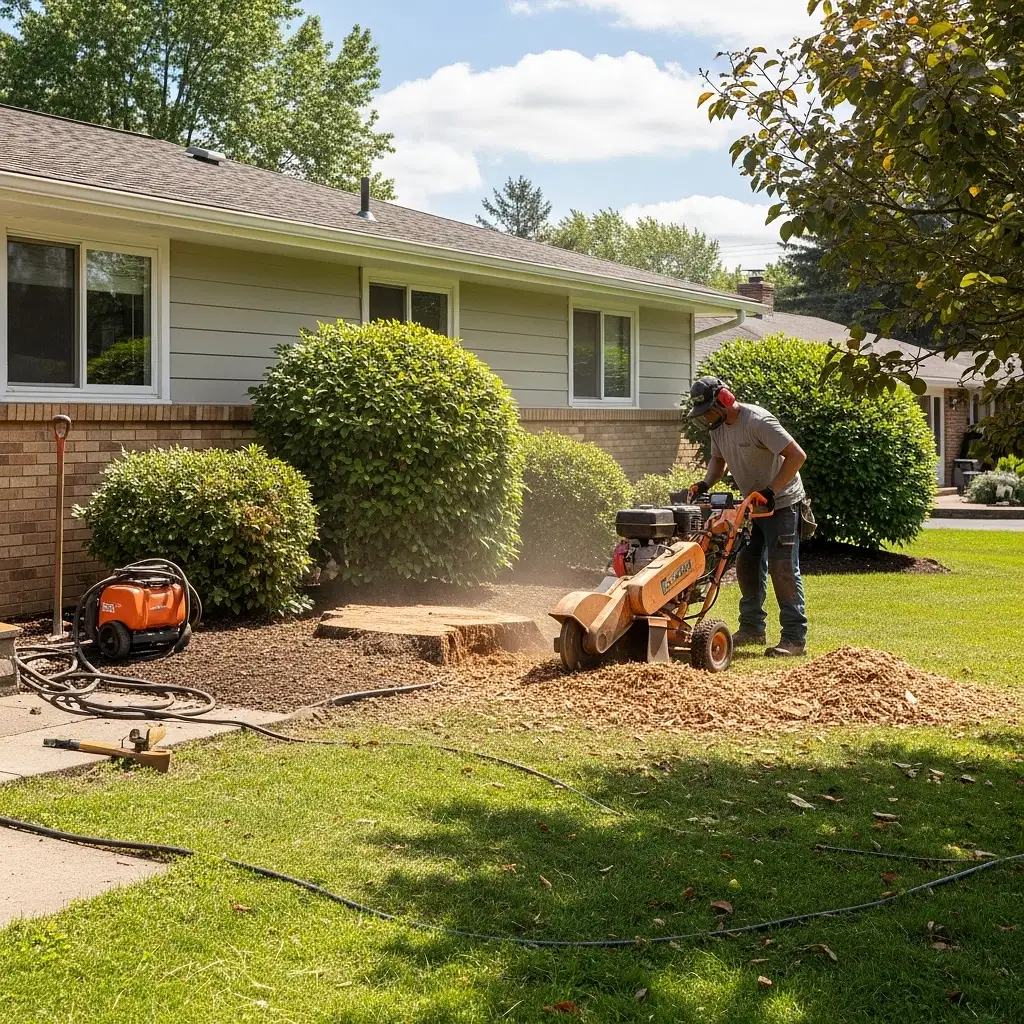
Because the root plate is often interwoven with rocks, heavy clay, and debris, standard chainsaws will quickly dull and become useless if used to cut it apart. This is where professional equipment becomes essential. The most efficient and thorough method for handling this remnant is stump grinding.
Grinding uprooted tree root balls requires heavy-duty machinery capable of chewing through tough wood fibers and dense soil simultaneously. By grinding the stump and structural roots down below the soil line, we eliminate the hazard entirely. This process turns the stubborn stump into a pile of nutrient-rich wood chips that can either be hauled away or used as mulch for your other landscaping projects.
Restoring Yard Craters After Tree Uprooting
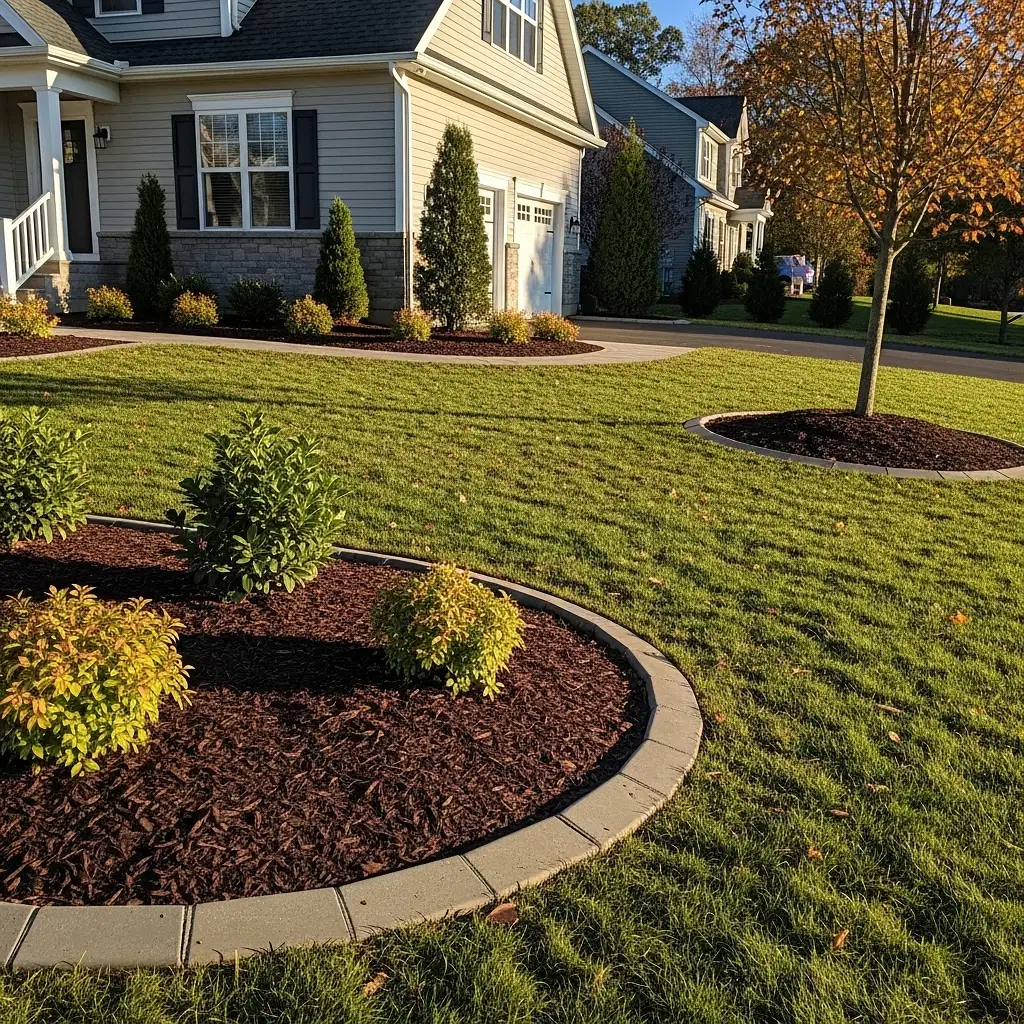
The final step in the recovery process is addressing the landscape itself. A blown-over tree leaves a significant void in your yard, often tearing up irrigation lines, outdoor lighting, or nearby hardscaping in the process. Restoring yard craters after tree uprooting is vital for the safety and aesthetics of your property.
Once the stump is ground down, the remaining hole must be properly filled. Simply kicking the loose, unsettled dirt back into the hole will lead to severe sinking and drainage issues the next time it rains. A professional landscaping approach involves removing excess wood chips, filling the void with high-quality topsoil, and thoroughly tamping it down to prevent future settling. Finally, the area is graded to match the contour of your existing lawn, seeded, and covered with straw to promote new grass growth.
Trust the Professionals for Your Storm Cleanup
Storm damage is stressful enough without having to worry about the physical risks of cleaning it up yourself. At Clearview Tree Service, our top core values are professionalism, quality workmanship, and excellent customer service. We pride ourselves on showing up promptly, working safely, and leaving your property looking beautiful again.
If you are dealing with the aftermath of severe weather in Martinsburg or the surrounding areas, do not take unnecessary risks with chainsaws and unpredictable root balls. Reach out to our experienced team for safe, efficient removal and reliable landscaping services. Contact us today to get your property cleared, safe, and fully restored.